I build the systems behind go-to-market.

What pulls me isn't the outreach. It's the engine underneath it: the data, the plumbing, the automations that decide who gets reached, when, and why. I build that machine, and I can run the outreach it powers.

LOADING DEMO
Who I am, and why I left sales to build GTM systems.
11
projects logged
~4 mo
of focused, full-time building
20+
tools used hands-on
01Origin

How I got here, in brief.

The short version: I've always lived in the systems behind go-to-market, the processes that quietly turn relationships into pipeline. Then AI started rewriting those systems overnight, collapsing what used to take a team into something one person could build. I decided to build with it, not around it, deliberately fortifying my craft to sit where sales, engineering, and a touch of marketing now meet.

BEFORE01

An operator who kept reaching for systems

Engineers don't usually end up in sales. I did, ~3.5 years in sales and key account management across B2B's least glamorous corners: oil & gas, precision auto-ancillary, heavy industry. The whole time, one itch nagged: too much of the engine ran on manual effort. I kept reaching for the system beneath the account.

THE SPARK02

AI, and a deliberate bet

Early 2026, AI stopped being background noise. A few weeks of digging led somewhere unsettling: every role is about to be rewritten. So I bet on where sales meets engineering: GTM engineering. Taught myself the stack in order (prompting, Clay, Make, HubSpot, n8n) and shipped six self-taught projects.

THE CLAY BOOTCAMP JOURNEY03

Going deep, and finding my edge

Tinkering took me far, then it didn't. So I went into the Clay Bootcamp: structured training, peers, real grounding in GTM ops and systems. It clarified my edge: I can run the outreach, but I reach for the engine first (the data, routing, and automations underneath it).

02Timeline

Walk the timeline, project by project.

Every project plotted from Feb'26 onward, and the line is still climbing. Click any milestone to check out the build behind it.

SELECT A POINT ON THE LINE TO READ MORE ABOUT THAT BUILD
03Entries

11 builds, and counting.

Most of these I taught myself, off Google, AI, and a need to figure things out before anyone showed me how. The Clay Bootcamp pushed the most recent ones further. What runs through all of them: the infrastructure most write off as unglamorous, but that's the kind that makes go-to-market move.

Featured Builds

The three I’d put in front of you first.

LOADING DEMO
May 2026

Chronos: Response-SLA Monitor

A CRM-agnostic accountability layer that watches every lead from assignment to first human touch, fires a Slack alert the instant an SLA breaches, and scores response speed by rep, segment, and hour. It's business-hours aware, and it never fakes its own compliance number.

// WHY I BUILT THIS

Routing tools get a lead to the right rep, but whether that rep actually reaches out (and how fast) is a black box where high-intent leads silently rot. I built the accountability layer that sits on top of whatever CRM a team already owns: swap Attio for HubSpot by changing one node, and the rest of the system stays untouched.

n8nAttioSupabaseGroqSlackClaude Code
LOADING DEMO
May 2026

Neptune: Self-Learning Reply Engine

Detects an inbound reply, enriches the sender, classifies intent, routes to the right model, and lands an approve-ready draft in the SDR's inbox in under 90 seconds, getting smarter with every approval.

// WHY I BUILT THIS

Every hour an SDR spends reading and drafting replies is an hour not spent on conversations that move deals. I automated the whole loop and made it compound: each approved reply logs back as a few-shot example, so the next draft is informed by every decision the team made before it.

n8nHubSpotGroqSlackAirtableGmailGoogle SheetsClaude Code
LOADING DEMO
May 2026

Andromeda: Outbound Attribution

Three task-matched LLMs repair messy CRM data (classifying replies, scoring urgency, summarising notes), then a live dashboard and a weekly Slack digest tell the team which campaigns to double down on.

// WHY I BUILT THIS

This one's personal: I spent enough time as an SDR to know the data problem isn't a discipline problem. Between calls you log the fields you can and leave the rest, and those gaps don't feel like much until the monthly numbers land and your deals are nowhere on the board. Outbound attribution lives and dies in the CRM, and most tools just dashboard whatever's already there. I wanted the opposite: repair the messy records first (classify the replies, score the urgency, summarise the notes), and only then call it insight, because a dashboard built on half-filled fields is just confident noise.

HubSpotGroqSlackClaude Code
All builds
LOADING DEMO
May 2026

Hermes: ICP-Drift Detector

A quarterly n8n workflow that pulls closed-deal data, splits it into cohorts, scores how far your ICP has drifted across every dimension, and drops a narrated PDF verdict (one number, act-now or stay-the-course) into Slack.

// WHY I BUILT THIS

ICP drift happens deal by deal, silently, until win rates sag and forecasting breaks, and nobody catches it because nobody's looking. I wanted to hand a founder one number every quarter, before the QBR, that tells them whether the customers they're winning still match the customers they think they're selling to.

n8nHubSpotGroqSlackClaude Code
LOADING DEMO
May 2026

Ventura: Agentic Lead Engine

An agent that sources US industrial distributors, disqualifies self-serve portals, gates spend behind an early ICP score, and drops verified, outreach-ready leads into Slack: 26 from 74 processed, zero manual research.

// WHY I BUILT THIS

For years I watched mid-market distributors run order entry and part-number coding by hand, and watched what it cost them: quotes going out late, replies slower than the competitor who answered first, deals lost in the gap. That gap between a distributor's ERP and its website is a systems problem, not a people one. Ventura is the build that goes and finds those distributors (the exact pain I'd seen with my own eyes), so an AI-enabled software product can reach the teams still drowning in the manual layer.

ExaGroqBlitzAPIGoogle SheetsSlackClaude Code
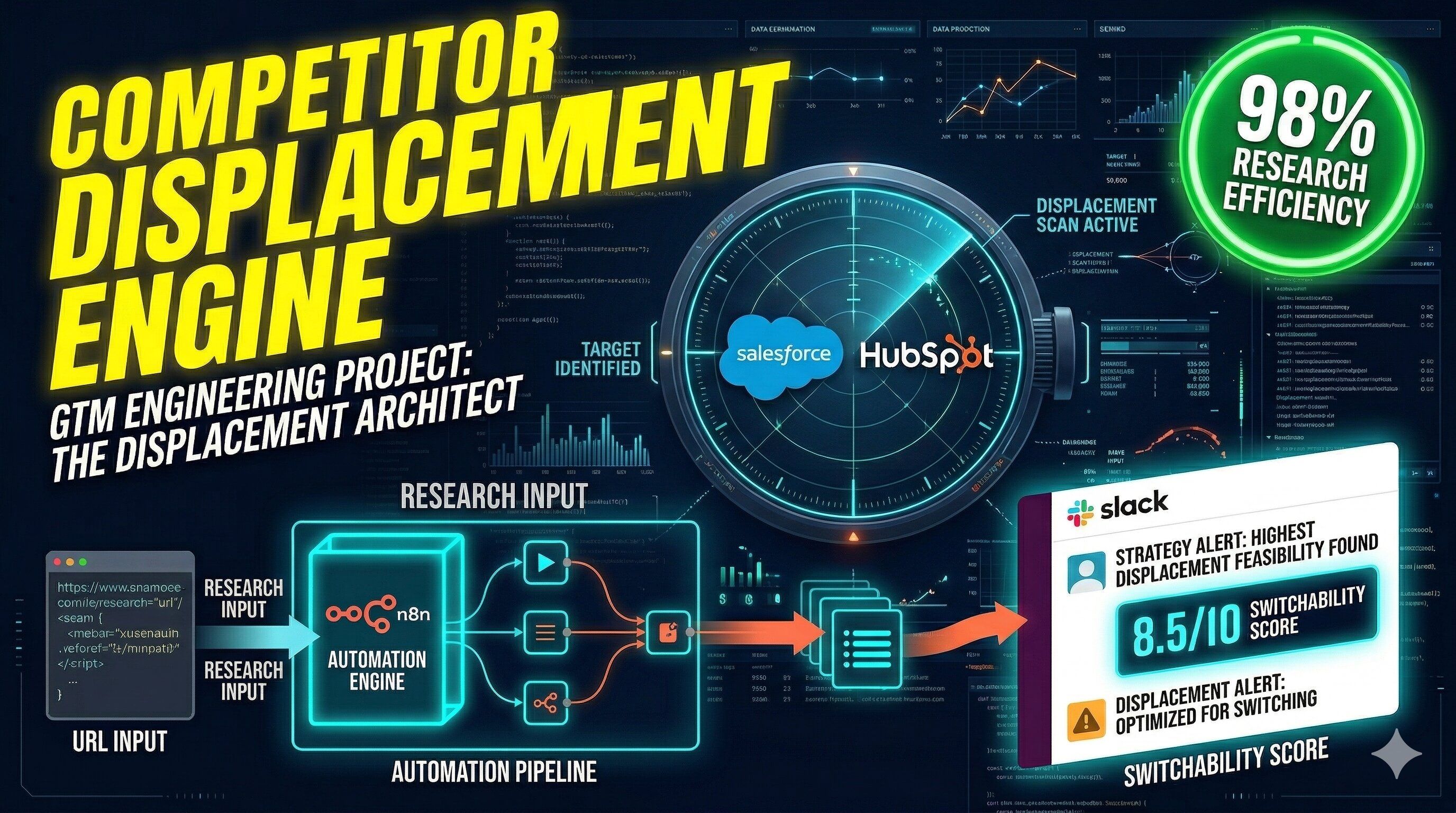
Competitor Take-Out BotMar 2026

Competitor Take-Out Bot

A technographic engine that detects which prospects run a competitor's CRM, scores their switch-ability 0–10, and routes hot targets into a ready-to-send displacement play.

// WHY I BUILT THIS

Knowing who's locked into a rival tool is pure revenue signal, if you catch it in time. I wanted to engineer that whole detection-to-pitch window down to seconds, with parallel routing and clean, CRM-safe data instead of manual stalking.

Clayn8nGroqHubSpotSlack
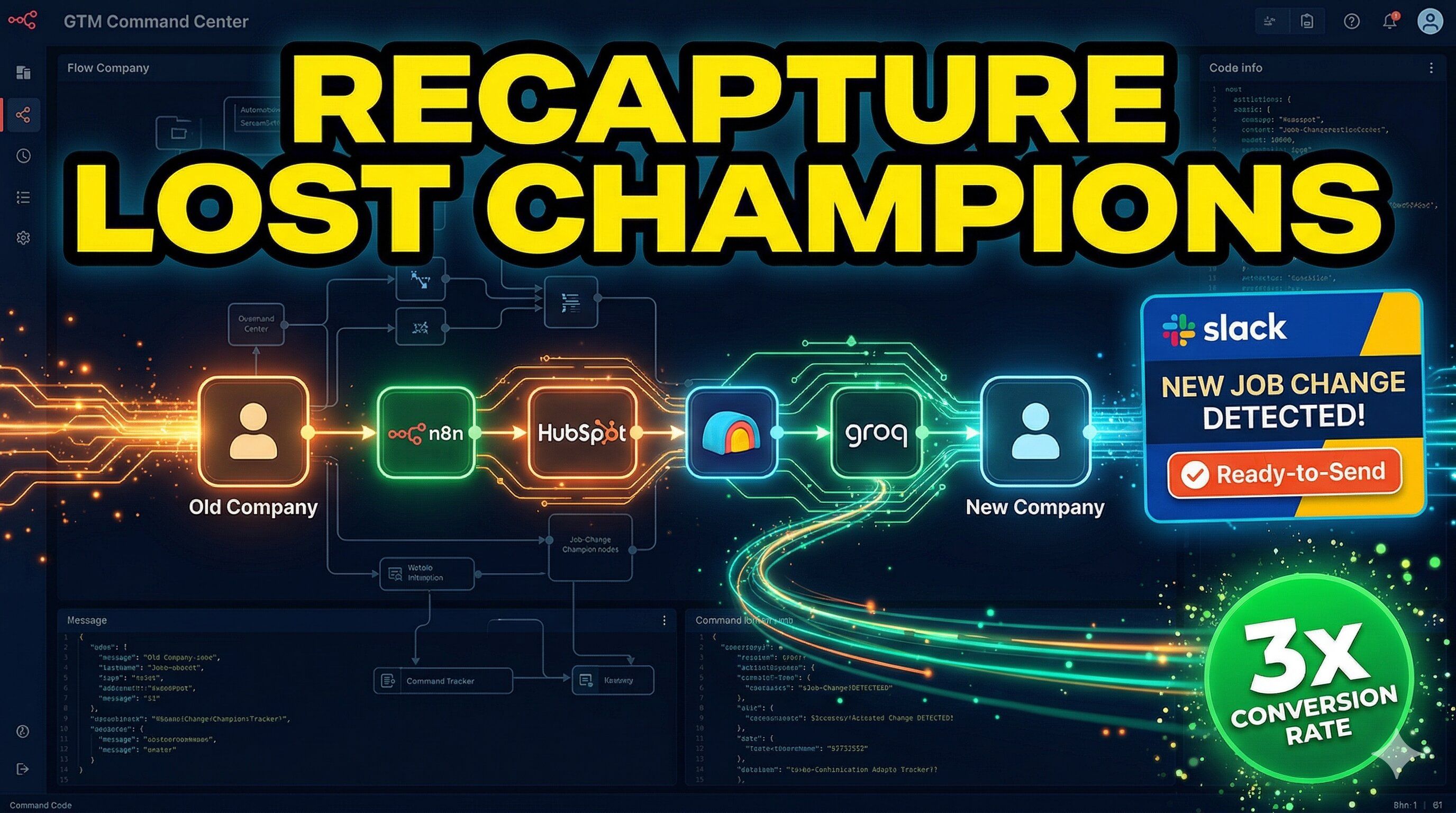
Job-Change Champion TrackerMar 2026

Job-Change Champion Tracker

A bi-directional detection loop that watches your CRM for champions who change jobs: flags the move, drafts a warm re-entry, and alerts the rep before the window closes.

// WHY I BUILT THIS

Champions move every 12–18 months and most teams lose them silently. I built this manually via the HubSpot API on purpose, to master programmatic fetching and JSON transformation that transfer to any stack, not the black box of a native connector.

n8nClayGroqHubSpotSlack
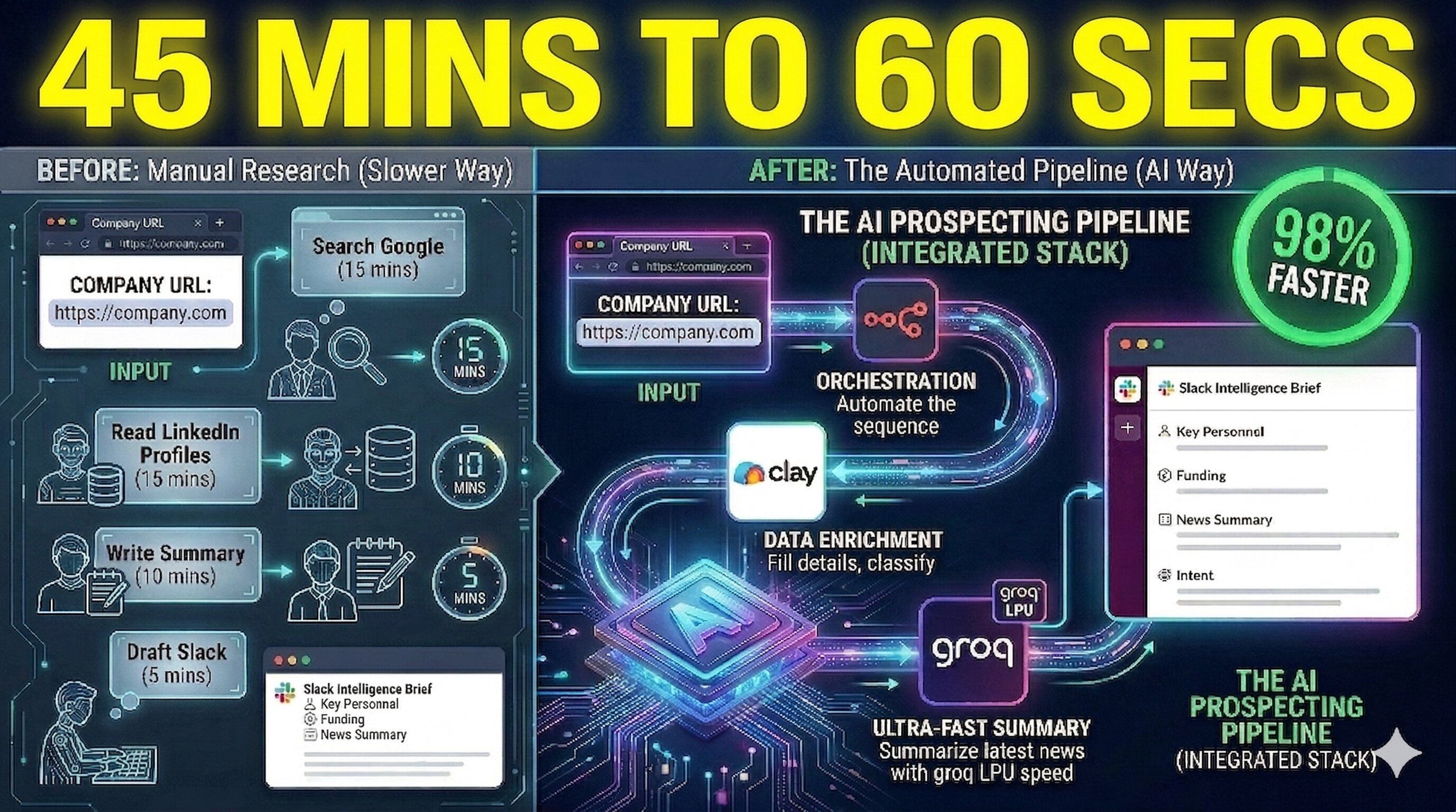
AI-Powered Lead Intelligence SystemFeb 2026

AI-Powered Lead Intelligence System

An n8n-orchestrated engine that turns a company name into a research-backed sales brief in 60 seconds: intent-scored, summarised by an LLM, and pushed to Slack and the CRM.

// WHY I BUILT THIS

Reps were losing 30–45 minutes hunting through tabs before a single email. I wanted to prove the whole research-to-brief loop could be engineered away: the unglamorous plumbing between tools is exactly where go-to-market leverage hides.

n8nClayGroqHubSpotSlack
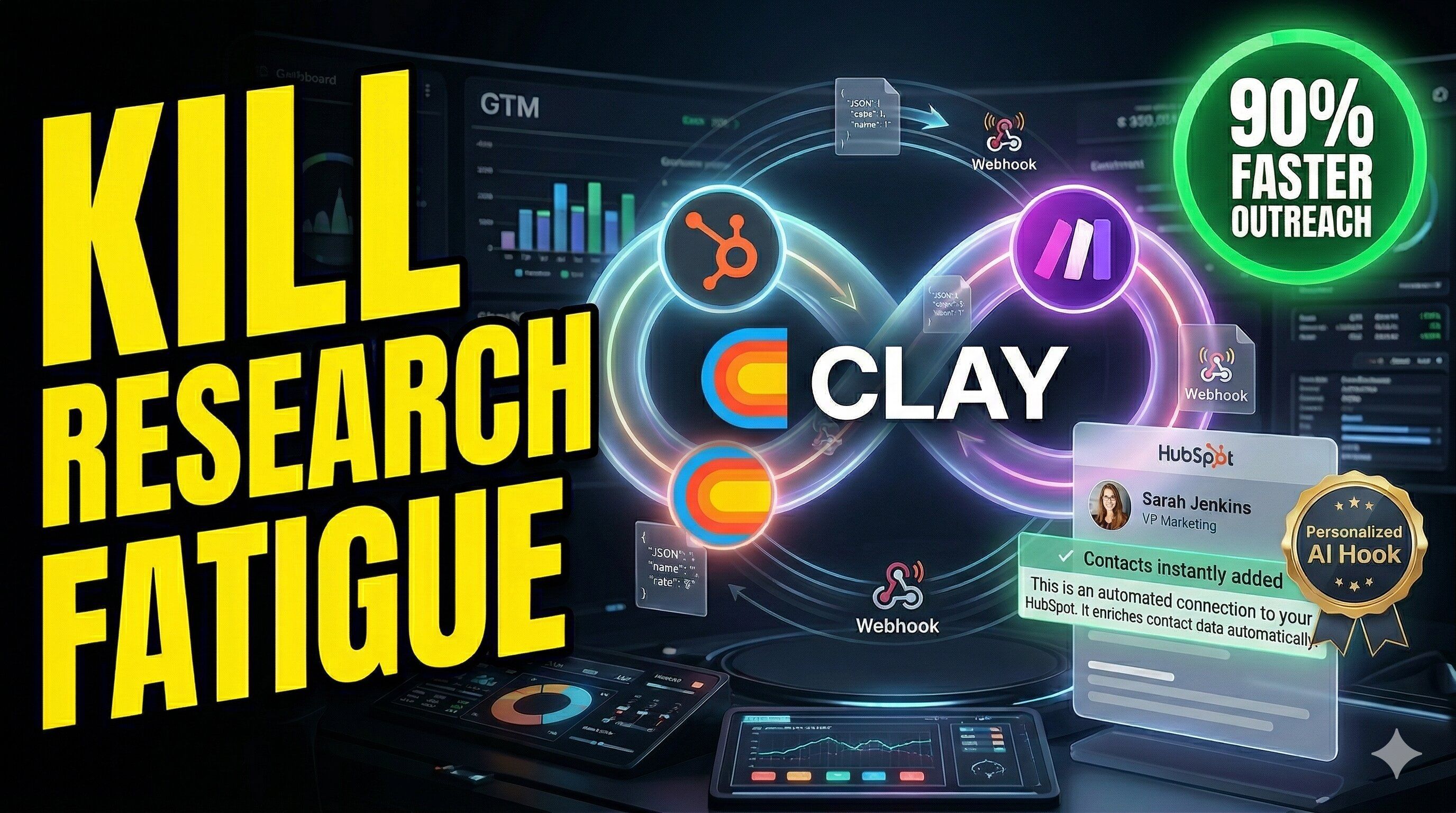
Bi-Directional API IntegrationFeb 2026

Bi-Directional API Integration

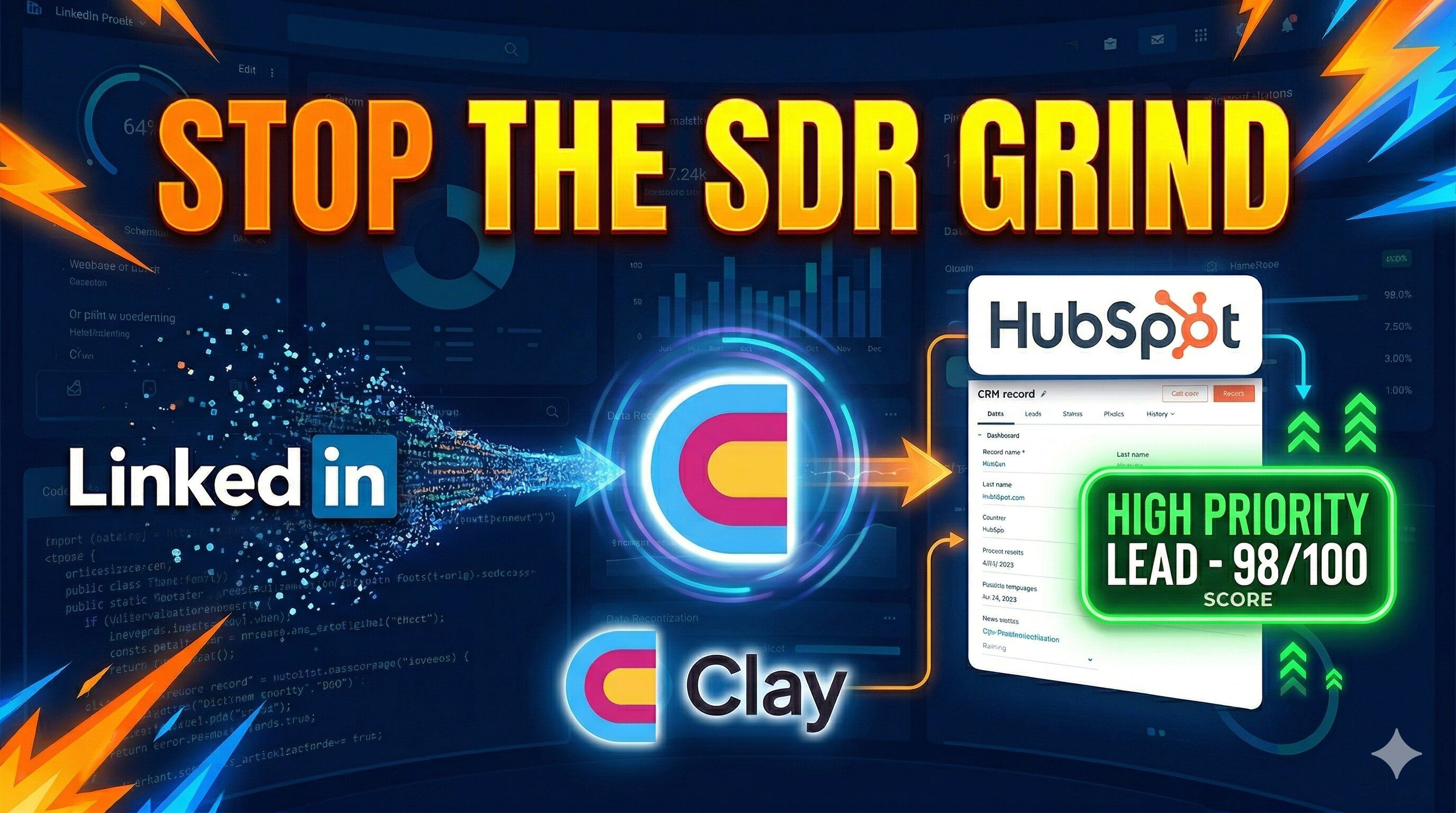
A closed-loop pipeline wiring HubSpot ↔ Make ↔ Clay with custom webhooks: a new contact triggers live news research and an AI opener that syncs straight back to the record.

// WHY I BUILT THIS

This was the jump from 'enrichment workflow' to real system engineering. I wanted to build the plumbing (webhooks, JSON payloads, asynchronous loops) that keeps the CRM a live single source of truth without anyone touching it.

ClayMakeHubSpotOpenAI
Intent-Based Outbound SystemFeb 2026

Intent-Based Outbound System

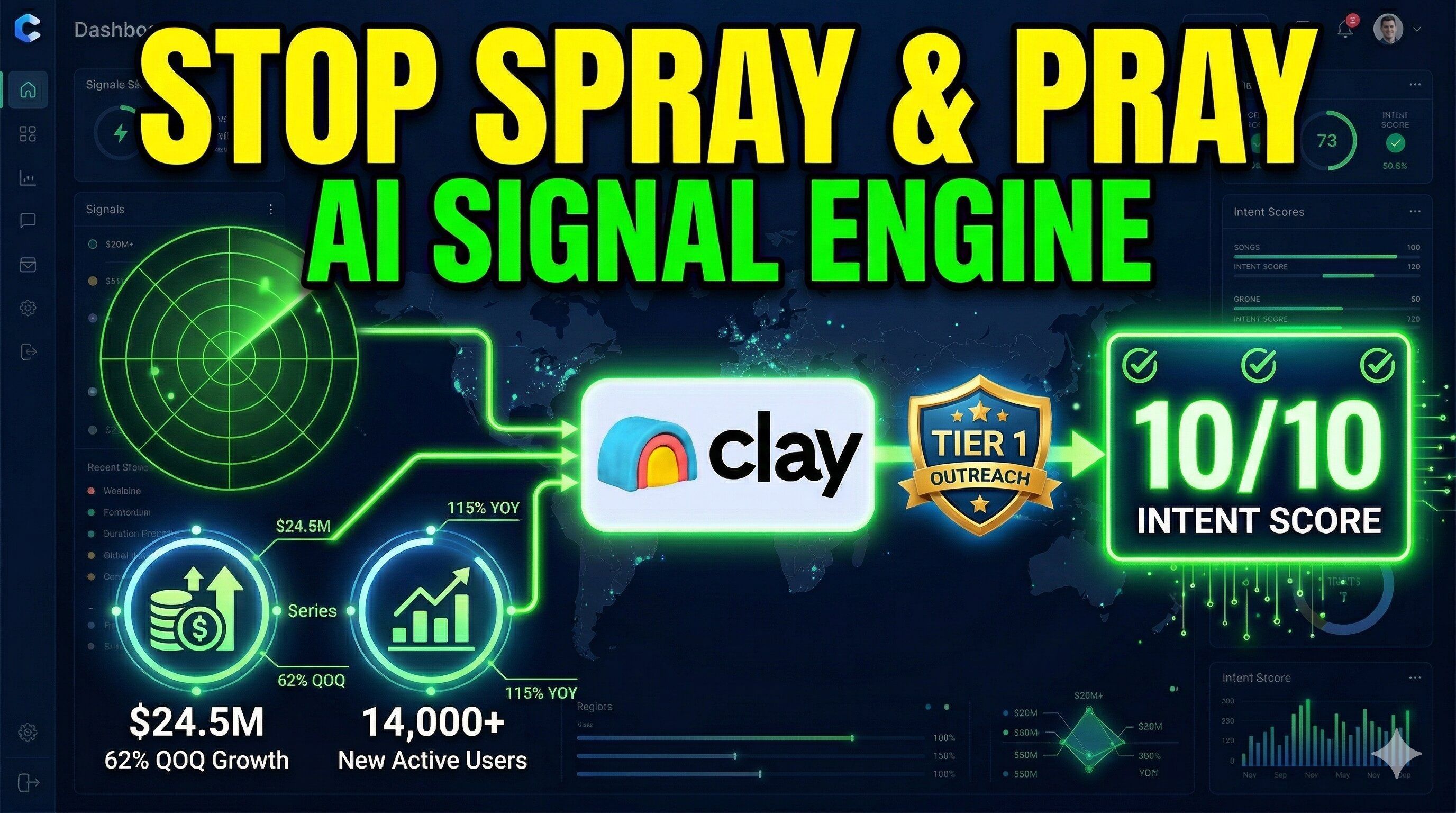
A signal-first prospecting engine that detects a company's buying window (recent funding, fast hiring), scores intent 0–10, and writes an opener tied to the actual trigger.

// WHY I BUILT THIS

Spray-and-pray burns leads and reps alike. I wanted a system that found the moment a company actually needed what you sell, so energy went only to accounts already in motion. Timing engineered, not guessed.

ClayOpenAI
LinkedIn Lead Enrichment SystemFeb 2026

LinkedIn Lead Enrichment System

A Clay pipeline that turns raw LinkedIn URLs into scored, personalised, CRM-ready contacts, built on a Find → Enrich → Transform → Export framework.

// WHY I BUILT THIS

Outreach is a catch-22: generic spam that gets ignored, or 15 minutes of manual research per prospect that never scales. My first real build answered it: engineer the research itself, so quality stops depending on how much time a human can spare.

ClayOpenAIHubSpot
04Tools

Tools I've picked up along the way.

There are more tools out there than anyone could master, each with its own strengths and trade-offs. Fluency in any single one was never the point. In a space where a sharper tool ships every other week, what matters is range: staying tool-agnostic, knowing your way around whatever the job calls for instead of marrying a stack. These are the ones I've actually had my hands on.

Clay logoClay
n8n logon8n
Make logoMake
OpenAI logoOpenAI
Groq logoGroq
Firecrawl logoFirecrawl
Deepline logoDeepline
Exa logoExa
Apollo logoApollo
BetterContact logoBetterContact
Prospeo logoProspeo
BlitzAPI logoBlitzAPI
Apify logoApify
HubSpot logoHubSpot
Attio logoAttio
Gmail logoGmail
Smartlead logoSmartlead
Slack logoSlack
Claude Code logoClaude Code
Supabase logoSupabase
Airtable logoAirtable
Google Sheets logoGoogle Sheets